Why we built waterless
The engineering story behind the sealed glycol loop — and why “zero municipal water” is a design, not a slogan.
 The closed loop
Ask anyone what worries them about a data centre and water is near the top of the list. It is a fair worry: many large campuses evaporate enormous volumes of water to reject heat. AHI was designed so that the question does not arise.
The loop. Coolant is piped directly to the chips — direct-to-chip cooling — in a sealed glycol loop. It absorbs heat at the silicon, carries it out of the hall, and recirculates. Nothing evaporates, so nothing needs topping up. The loop is not connected to municipal supply.
The climate. At 52.3°N, Alberta gives free cooling for most of the year. Heat rejection uses the air, not water — the same principle the province’s own AI Data Centres Strategy asks for under “sustainable cooling.”
The numbers. The halls are designed for a PUE of 1.10–1.18, against typical market PUE of 1.3–1.5, and a single-phase immersion option runs from PUE 1.04. Any water used on site — domestic draw — is captured, cleansed and reused.
The by-product. Heat is not waste at AHI. It is engineered to feed year-round agritech on the campus — the food-security pillar, made possible by the cooling design.
Waterless is the harder way to build. It is also the only way to be the driest industrial neighbour in the park.
AHI — AI Hub of Innovation is developed by Havenz Smart Communities (Lead Developer) in partnership with Turning Stone Developments (Lead Investor); both are general partners of AHI. Figures are as published on ahicampus.com at the date shown; nothing in this article constitutes an offer to sell or a solicitation to buy securities. Growth beyond the 30 MW plan of record is a pathway subject to its own permits and studies.
More from the newsroom
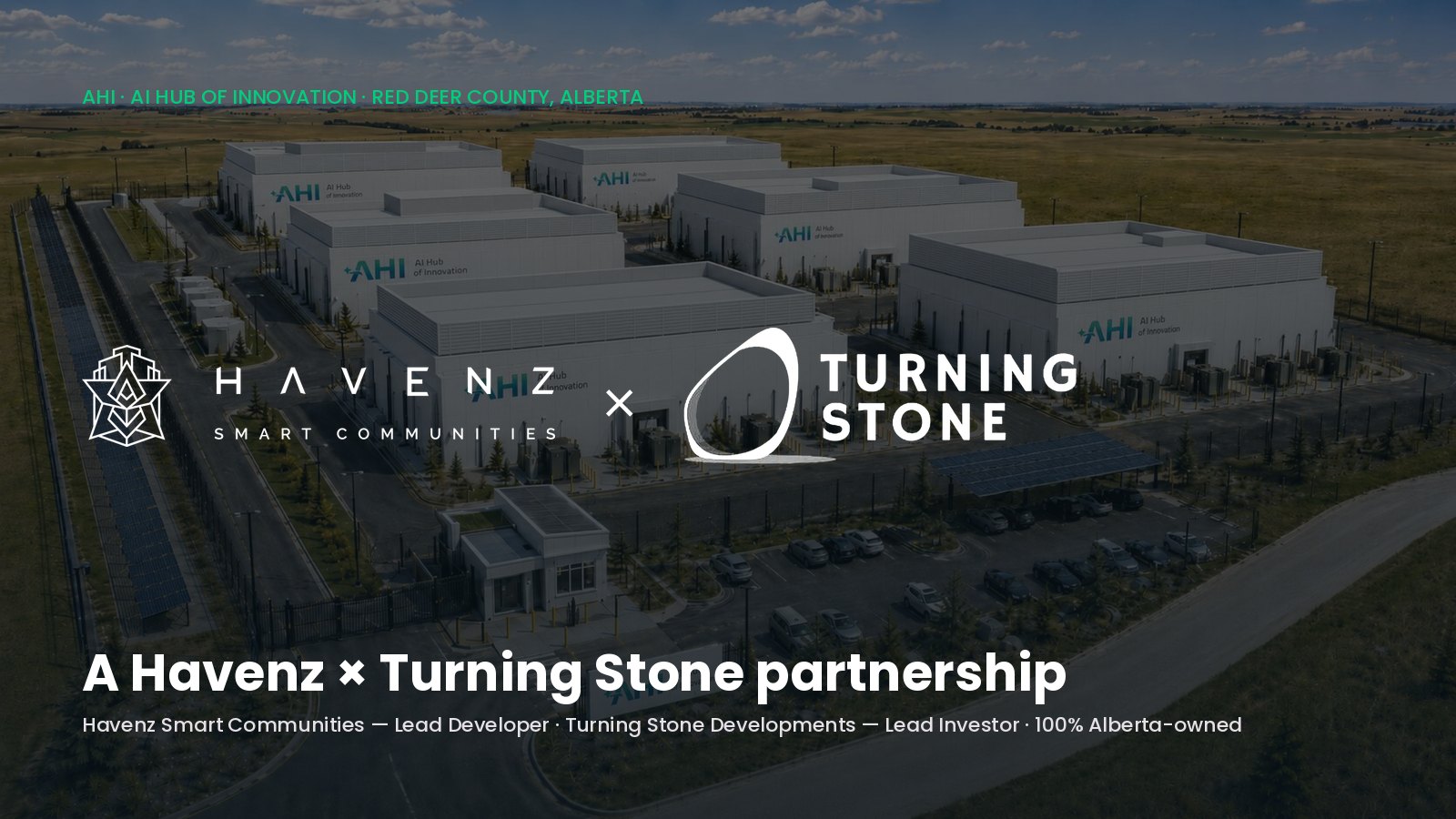
AHI × Turning Stone: Indigenous-owned partnership at the forefront of Alberta’s AI campus
Havenz Smart Communities, Lead Developer, and Turning Stone Developments, the Métis-led, Indigenous-owned Lead Investor — one flagship, one standard.
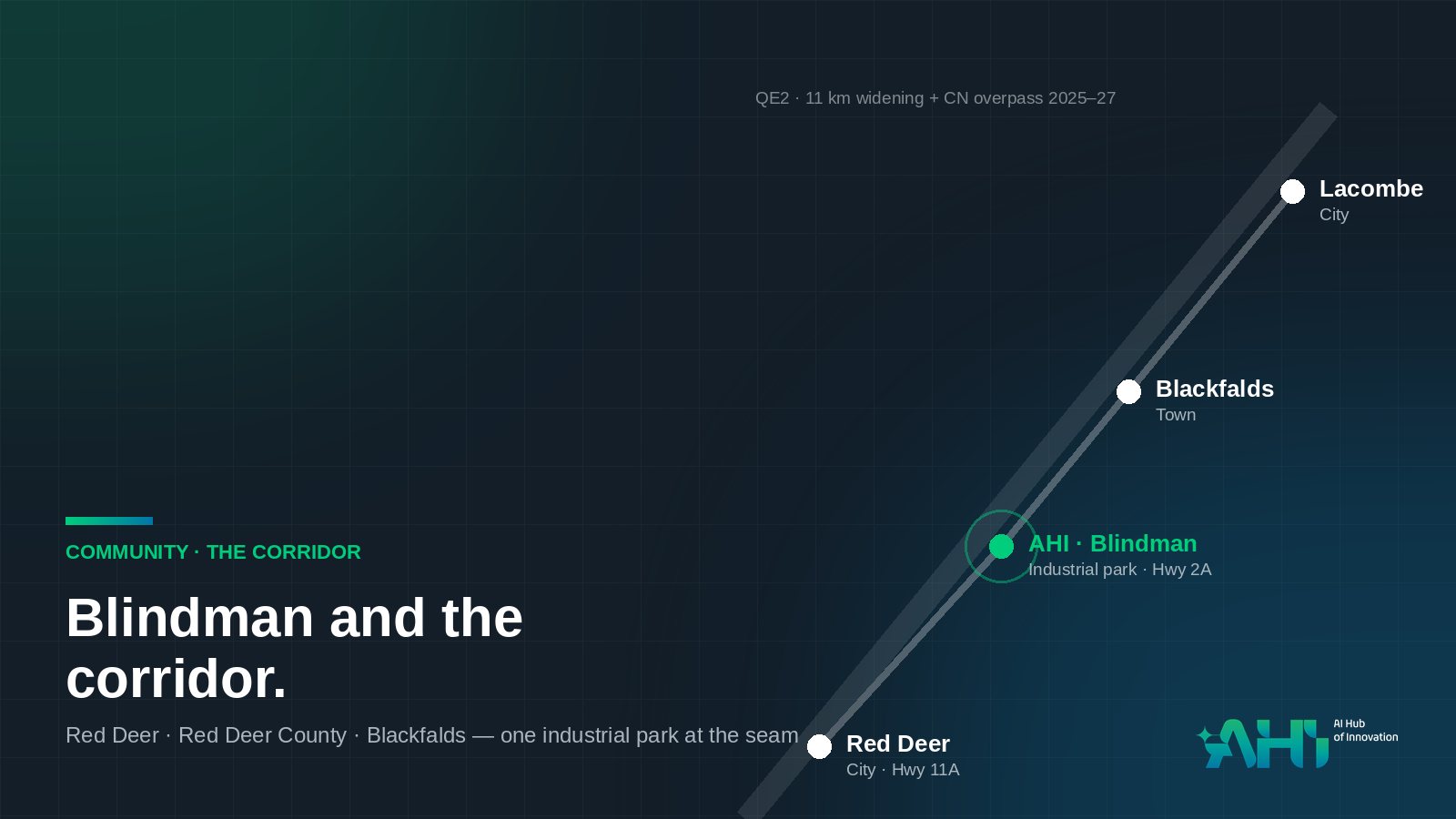
Blindman and the corridor: what an anchor project does for a heavy-industrial park
A County industrial park at the seam of Red Deer, Red Deer County and Blackfalds — on a transportation corridor that is getting bigger.
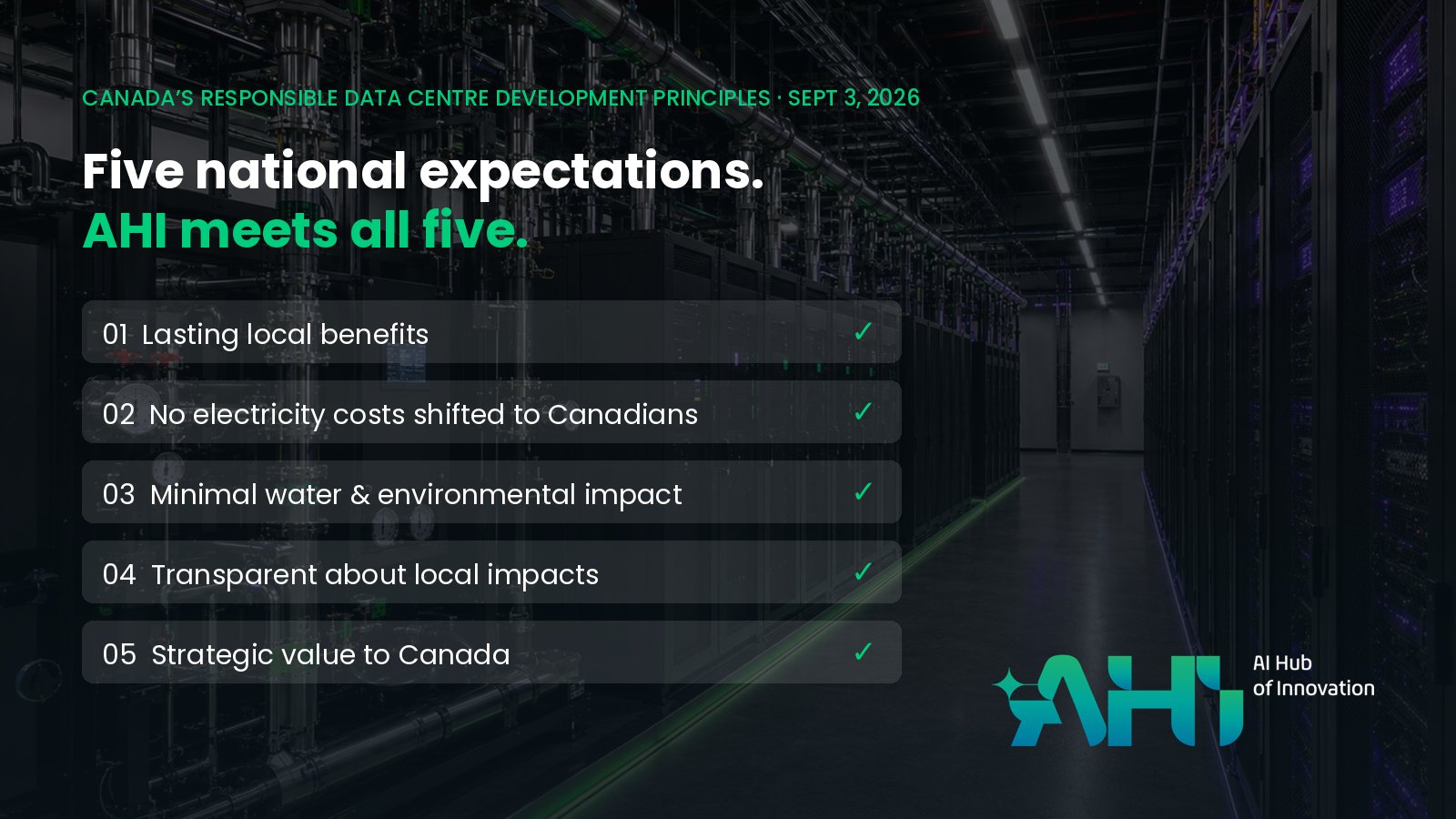
Canada launches Responsible Data Centre Development Principles — AHI publishes its line-by-line alignment
Lasting local benefits · no electricity costs shifted · minimal water · transparency · strategic value to Canada — five national expectations, five answers on the record.